Opens in a new tab
 /* update variables when header is on dark background*/
.on-dark-bg {
   --header-bg: var(--current-header-bg);
   --chevron-clr: white;
   --menu-item-clr: white;
   --menu-item-hover-bg: #172235;
   --menu-item-hover-clr: #bc92e6;
   --menu-toggle-clr: var(--menu-item-clr);
   --dropdown-content-border: solid 1px rgb(220 220 220 / 20%);
   --mobile-menu-bg: var(--header-bg);
 }

 .on-light-bg {
   --menu-item-clr: black;
   /* update variables when header is on light background*/
 }


 /* update variable when on dark or light background */
 .on-dark-bg,
 .on-light-bg {
   --overlay-header-bg-active: var(--current-header-bg);
   --dropdown-content-bg: var(--current-header-bg);
 }

 .on-video-section {
   /* update variables when header is on video section*/
   --menu-item-clr: white;
   --chevron-clr: white;
   --menu-item-hover-bg: rgb(0 0 0 / 30%);
   --menu-item-hover-clr: #bc92e6;
   --dropdown-content-bg: rgb(0 0 0 / 70%);
   --overlay-header-bg: rgb(0 0 0 / 25%);
   --overlay-header-bg-active: var(--dropdown-content-bg);
   --dropdown-content-border: solid 1px rgb(220 220 220 / 20%);
   --current-header-bg: rgb(0 0 0 / 14%) !important;
   --header-bg: rgb(0 0 0 / 70%);
   --menu-toggle-clr: white;
   --mobile-menu-bg: rgb(0 0 0 / 95%);
   --menu-cta-border: var(--dropdown-content-border)
 }


 .on-hero-section {
   /* update variables when header is on hero section*/
 }

 /* header bg blure when on video section */
 html:not(.dwc-mobile) .dwc-nest-header.on-video-section {
   backdrop-filter: blur(var(--overlay-header-blur));
 }

 /* overlay header border when on video section or dark background*/
 .dwc-nest-header:is(.on-dark-bg, .on-video-section)[data-overlay-header="true"] {
   border: 1px solid rgba(255, 255, 255, 0.2);
 }

 /* header bottom border when on dark background or video section*/
 .dwc-nest-header:is(.on-dark-bg, .on-video-section) {
   border-bottom: 1px solid rgba(255, 255, 255, 0.2);
 }


 /* logo color when on dark background*/
 .on-dark-bg .dwc-nest-menu__logo path {
   fill: white;
 }

 /* logo color when on light background*/
 .on-dark-bg .dwc-nest-menu__logo path {
   /*define svg fill when logo is on light background */
 }

 /* logo color when on video background*/
 .on-video-section .dwc-nest-menu__logo path {
   fill: white;
 }

/*custom */

.on-dark-bg .mega-menu-magic__menu-icon-large{
   background-color: var(--current-header-bg);
    fill: #bc92e6;
    color: #bc92e6;
}

.on-video-section .mega-menu-magic__menu-icon-large{
   background-color: var(--current-header-bg);
    fill: #bc92e6;
    color: #bc92e6;
}

.on-video-section .mega-menu-magic__dropdown-title,
.on-dark-bg .mega-menu-magic__dropdown-title{
    color: rgb(210 210 210);   
}
// Constants
const BREAKPOINT_DESKTOP = 0;
const DEBOUNCE_DELAY = 50;

// Configuration object for all header-related selectors
const HEADER_CONFIG = {
  // Main header element
  headerElement: '.dwc-nest-header',
  // Wrapper element selectors (can be classes, IDs, or data attributes)
  wrapperSelectors: [
    // '.dwc-nest-header__container'
  ],
  // Elements to monitor for header styling (can include any CSS selector)
  // Default monitors sections, but you can add footer, divs, or any element
  monitoredElements: 'section, [data-header-zone]',
  // Store original header background color
  originalHeaderBgColor: null
};

// Unified section type configuration
// Add new data attributes here - they will be automatically mapped to header classes
const SECTION_TYPES = {
  'data-hero': 'on-hero-section',
  'data-video': 'on-video-section',
  'data-custom': 'on-custom-section',
  'data-sticky': 'on-media-section'
  // Add new: 'data-feature': 'on-feature-section'
};

// Configuration for excluded sections
const EXCLUSION_CONFIG = {
  // Data attribute that identifies sections to exclude from header styling
  sectionAttribute: 'data-exclude-header'
};

// Text color classes
const TEXT_CLASSES = {
  light: 'on-dark-bg',
  dark: 'on-light-bg'
};

// Generate classes to remove dynamically from SECTION_TYPES and text classes
const ALL_CLASSES_TO_REMOVE = [
  // Add all header classes from section types
  ...Object.values(SECTION_TYPES),
  // Add text color classes
  TEXT_CLASSES.light,
  TEXT_CLASSES.dark
];

// Performance optimization: Cache DOM elements and computed values
const CACHE = {
  headerElement: null,
  wrapperElement: null,
  sections: [],
  sectionsData: new Map(),
  colorCache: new Map(),
  tempColorElement: null,
  lastKnownSection: null,
  isUpdating: false,
  pendingColorUpdate: false
};

// Initialize cache
function initializeCache() {
  // Cache header elements
  CACHE.headerElement = document.querySelector(HEADER_CONFIG.headerElement);
  
  // Try each wrapper selector until one is found
  for (const selector of HEADER_CONFIG.wrapperSelectors) {
    CACHE.wrapperElement = document.querySelector(selector);
    if (CACHE.wrapperElement) break;
  }
  
  // Cache sections and their positions
  CACHE.sections = Array.from(document.querySelectorAll(HEADER_CONFIG.monitoredElements));
  
  // Create reusable element for color calculations
  CACHE.tempColorElement = document.createElement('div');
  CACHE.tempColorElement.style.position = 'absolute';
  CACHE.tempColorElement.style.visibility = 'hidden';
  CACHE.tempColorElement.style.pointerEvents = 'none';
  document.body.appendChild(CACHE.tempColorElement);
  
  // Cache section metadata
  updateSectionsCache();
}

// Update sections cache (call when DOM changes)
function updateSectionsCache() {
  CACHE.sections = Array.from(document.querySelectorAll(HEADER_CONFIG.monitoredElements));
  CACHE.sectionsData.clear();
  
  CACHE.sections.forEach((section, index) => {
    const sectionData = {
      index,
      isExcluded: section.hasAttribute(EXCLUSION_CONFIG.sectionAttribute)
    };
    
    // Dynamically check for all section types defined in SECTION_TYPES
    Object.keys(SECTION_TYPES).forEach(attribute => {
      sectionData[attribute] = section.hasAttribute(attribute);
    });
    
    CACHE.sectionsData.set(section, sectionData);
  });
}

// Function to remove all section classes from :root only
function removeAllSectionClasses() {
  const rootElement = document.documentElement;
  
  // Remove classes from :root only
  rootElement.classList.remove(...ALL_CLASSES_TO_REMOVE);
}

// Function to update the CSS variable on :root
function updateRootBackgroundVariable(color) {
  document.documentElement.style.setProperty('--current-header-bg', color);
}

// Function to apply classes to :root only
function applyClassesToRoot(headerClass, textClass) {
  const rootElement = document.documentElement;
  
  // Apply header class to :root only
  if (headerClass) {
    rootElement.classList.add(headerClass);
  }
  
  // Apply text class to :root only
  if (textClass) {
    rootElement.classList.add(textClass);
  }
}

// Optimized color conversion using cached temp element
function getRGBValues(color) {
  const cacheKey = color;
  if (CACHE.colorCache.has(cacheKey)) {
    return CACHE.colorCache.get(cacheKey);
  }
  
  CACHE.tempColorElement.style.color = color;
  const computedColor = window.getComputedStyle(CACHE.tempColorElement).color;
  
  // Extract RGB values
  const match = computedColor.match(/rgba?\((\d+),\s*(\d+),\s*(\d+)/);
  const result = match ? {
    r: parseInt(match[1]),
    g: parseInt(match[2]),
    b: parseInt(match[3])
  } : { r: 255, g: 255, b: 255 };
  
  // Cache the result
  CACHE.colorCache.set(cacheKey, result);
  return result;
}

// Function to check if a background color is transparent or empty
function isBackgroundTransparent(color) {
  if (!color) return true;
  
  const transparentValues = [
    'transparent',
    'rgba(0, 0, 0, 0)',
    'rgba(0,0,0,0)',
    'initial',
    'inherit',
    ''
  ];
  
  return transparentValues.includes(color.toLowerCase().replace(/\s/g, ''));
}

// Function to determine if a color is dark or light
function isColorDark(color) {
  if (color === 'transparent' || color === 'rgba(0, 0, 0, 0)') {
    return false;
  }
  
  const rgb = getRGBValues(color);
  const luminance = (0.299 * rgb.r + 0.587 * rgb.g + 0.114 * rgb.b) / 255;
  return luminance < 0.5;
}

// Optimized section detection using cached data
function getCurrentSection() {
  if (!CACHE.headerElement || CACHE.sections.length === 0) return null;
  
  const headerHeight = CACHE.headerElement.offsetHeight;
  
  // Quick check if we're still in the same section
  if (CACHE.lastKnownSection) {
    const rect = CACHE.lastKnownSection.getBoundingClientRect();
    if (rect.top <= headerHeight && rect.bottom > headerHeight) {
      return CACHE.lastKnownSection;
    }
  }
  
  // Binary search would be ideal here, but simple loop is sufficient for most cases
  for (const section of CACHE.sections) {
    const rect = section.getBoundingClientRect();
    if (rect.top <= headerHeight && rect.bottom > headerHeight) {
      CACHE.lastKnownSection = section;
      return section;
    }
  }
  
  const firstSection = CACHE.sections[0] || null;
  CACHE.lastKnownSection = firstSection;
  return firstSection;
}

// Function to get computed background color with caching
function getComputedBackgroundColor(element) {
  const cacheKey = element;
  if (CACHE.colorCache.has(cacheKey)) {
    return CACHE.colorCache.get(cacheKey);
  }
  
  const bgColor = window.getComputedStyle(element).backgroundColor;
  CACHE.colorCache.set(cacheKey, bgColor);
  return bgColor;
}

// Function to initialize original header background color
function initializeOriginalHeaderBgColor() {
  if (CACHE.headerElement) {
    HEADER_CONFIG.originalHeaderBgColor = window.getComputedStyle(CACHE.headerElement).backgroundColor;
  }
}

// Function to determine header style configuration based on section
function determineHeaderConfig(section) {
  if (!section) return null;
  
  const sectionData = CACHE.sectionsData.get(section);
  if (!sectionData) return null;
  
  // If section is excluded, return null to skip styling
  if (sectionData.isExcluded) {
    return null;
  }
  
  // Dynamically check for any section type defined in SECTION_TYPES
  for (const [attribute, headerClass] of Object.entries(SECTION_TYPES)) {
    if (sectionData[attribute]) {
      return {
        backgroundColor: null,
        headerClass: headerClass,
        needsWhiteText: null,
        isSpecialSection: true
      };
    }
  }
  
  // Get the actual background color of the section
  const sectionBgColor = getComputedBackgroundColor(section);
  
  if (isBackgroundTransparent(sectionBgColor)) {
    return {
      backgroundColor: HEADER_CONFIG.originalHeaderBgColor || 'rgb(255, 255, 255)',
      headerClass: null,
      needsWhiteText: isColorDark(HEADER_CONFIG.originalHeaderBgColor || 'rgb(255, 255, 255)'),
      isSpecialSection: false
    };
  }
  
  const needsWhiteText = isColorDark(sectionBgColor);
  
  return {
    backgroundColor: sectionBgColor,
    headerClass: null,
    needsWhiteText: needsWhiteText,
    isSpecialSection: false
  };
}

// Function to apply styles (background color to header, classes to :root only)
function applyHeaderStyles(config) {
  if (!CACHE.headerElement || !config) return;
  
  const elementsToStyle = [CACHE.headerElement, CACHE.wrapperElement].filter(Boolean);
  
  // Use requestAnimationFrame for smooth visual updates
  requestAnimationFrame(() => {
    // First, remove all section classes and text classes from :root only
    removeAllSectionClasses();
    
    // Update the root CSS variable with background color
    if (config.backgroundColor !== null) {
      const appliedBgColor = config.backgroundColor || '';
      updateRootBackgroundVariable(appliedBgColor);
    } else {
      updateRootBackgroundVariable('');
    }
    
    // Determine text class to apply
    const textClass = config.needsWhiteText !== null 
      ? (config.needsWhiteText ? TEXT_CLASSES.light : TEXT_CLASSES.dark)
      : null;
    
    // Apply classes to :root only
    applyClassesToRoot(config.headerClass, textClass);
    
    // Handle background color on header elements only
    elementsToStyle.forEach(element => {
      if (config.backgroundColor !== null) {
        const appliedBgColor = config.backgroundColor || '';
        element.style.backgroundColor = appliedBgColor;
      } else {
        element.style.backgroundColor = '';
      }
    });
    
    // For special sections, allow CSS to apply first, then get computed background color
    if (config.isSpecialSection && config.headerClass) {
      // Use setTimeout(0) to ensure CSS has been applied, but batch multiple calls
      if (!CACHE.pendingColorUpdate) {
        CACHE.pendingColorUpdate = true;
        setTimeout(() => {
          // Process all elements that need color updates in this batch
          elementsToStyle.forEach(el => {
            // Check if element has any of the section classes (though they're not applied anymore)
            const hasSectionClass = Object.values(SECTION_TYPES).some(className => 
              el.classList.contains(className)
            );
            
            if (hasSectionClass) {
              const computedBgColor = getComputedBackgroundColor(el);
              updateRootBackgroundVariable(computedBgColor);
            }
          });
          CACHE.pendingColorUpdate = false;
        }, 50);
      }
    }
    
    CACHE.isUpdating = false;
  });
}

// Throttled update function using requestAnimationFrame
function updateHeaderStyles() {
  // Prevent multiple updates in the same frame
  if (CACHE.isUpdating) return;
  
  // Apply only on screens larger than the breakpoint
  if (window.innerWidth <= BREAKPOINT_DESKTOP) {
    return;
  }
  
  CACHE.isUpdating = true;
  
  const currentSection = getCurrentSection();
  if (!currentSection) {
    CACHE.isUpdating = false;
    return;
  }
  
  const headerConfig = determineHeaderConfig(currentSection);
  if (!headerConfig) {
    CACHE.isUpdating = false;
    return;
  }
  
  applyHeaderStyles(headerConfig);
}

// Debounce function for resize events (less frequent)
function debounce(func, wait) {
  let timeout;
  return function executedFunction(...args) {
    const later = () => {
      clearTimeout(timeout);
      func(...args);
    };
    clearTimeout(timeout);
    timeout = setTimeout(later, wait);
  };
}

// RAF-based throttle for scroll events
let rafId = null;
function throttleWithRAF(func) {
  return function(...args) {
    if (rafId) return;
    
    rafId = requestAnimationFrame(() => {
      func.apply(this, args);
      rafId = null;
    });
  };
}

// Initialize everything
function initialize() {
  initializeCache();
  initializeOriginalHeaderBgColor();
  updateHeaderStyles();
}

// Cleanup function
function cleanup() {
  if (CACHE.tempColorElement && CACHE.tempColorElement.parentNode) {
    CACHE.tempColorElement.parentNode.removeChild(CACHE.tempColorElement);
  }
  if (rafId) {
    cancelAnimationFrame(rafId);
  }
}

// Initialize on page load
if (document.readyState === 'loading') {
  document.addEventListener('DOMContentLoaded', initialize);
} else {
  initialize();
}

// Create optimized event handlers
const throttledUpdateHeaderStyles = throttleWithRAF(updateHeaderStyles);
const debouncedUpdateHeaderStyles = debounce(() => {
  updateSectionsCache(); // Refresh cache on resize
  updateHeaderStyles();
}, DEBOUNCE_DELAY);

// Add event listeners with passive option for better performance
window.addEventListener('scroll', throttledUpdateHeaderStyles, { passive: true });
window.addEventListener('resize', debouncedUpdateHeaderStyles, { passive: true });

// Cleanup on page unload
window.addEventListener('beforeunload', cleanup);

Case studies

Cardio of the Future: The Importance of Networked Consoles

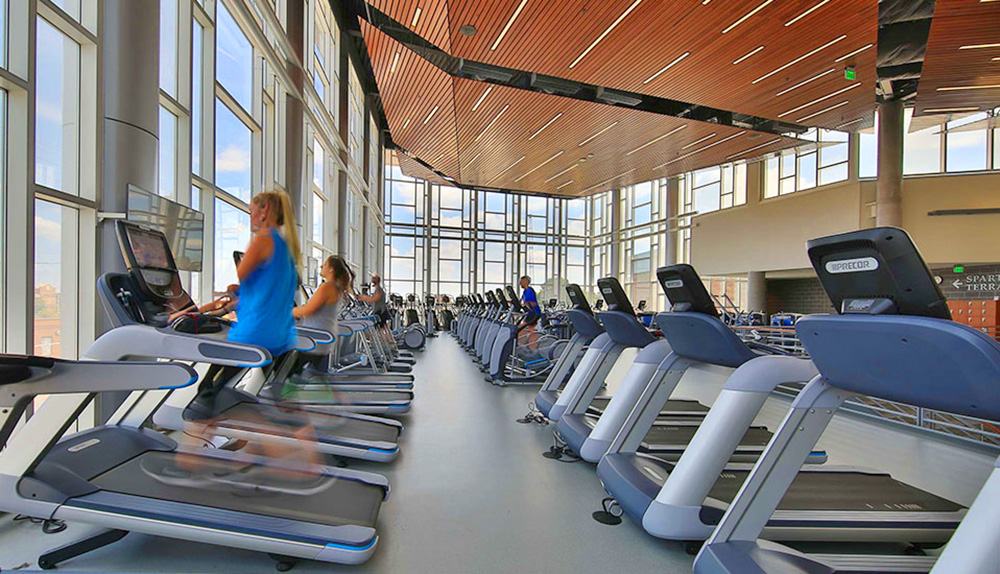
Most fitness center operators have begun to move beyond simply wanting ways in which to better monitor their fitness equipment — many clubs and recreation centers are looking to set themselves up for the future. Operators are asking the questions about how they can further engage their clientele through content and on-demand workouts, and how they can integrate their equipment and member-management systems.

Networked cardio consoles

Most fitness facility managers have begun to move beyond simply wanting ways to better monitor their fitness equipment — many clubs and recreation centers are looking to set themselves up for the future. Operators are asking questions about how they can further engage their clientele through content and on-demand workouts, and how they can integrate their equipment and member-management systems.

Today’s high-end connected cardio equipment addresses a range of needs, from tracking the minutia of workouts to addressing operational pain points. Here are a few reasons why an investment in cardio equipment upgrades might just be the key to boost business, satisfy clients, and ease the challenges of day-to-day operations.
What is.png

Personalization

When every piece of cardio is controlled through a touchscreen console, exercisers become a captive audience of sorts — this is a great opportunity for operators to personalize the client experience and differentiate themselves from competitors.

“My definition of success is when there are four gyms on the same block that have [Precor cardio] in them, but they all look different,” Jeff Bartee, Product Manager at Precor, told Athletic Business. “They act differently. They have different services on them, and they’re all reflecting the individual club’s message.”

Achieving a customized experience works by combining a number of unique features on networked cardio units. For instance, operators can message a user directly on a networked console about anything from new programming to holiday hours. Personal trainers can review workouts and check in with feedback. Connected software also provides the infrastructure for some additional benefits, such as personal profiles that allow individuals to immediately log into and access all of their favorite entertainment apps – Netflix, Hulu, YouTube, ESPN, and more.

Member Retention & Engagement

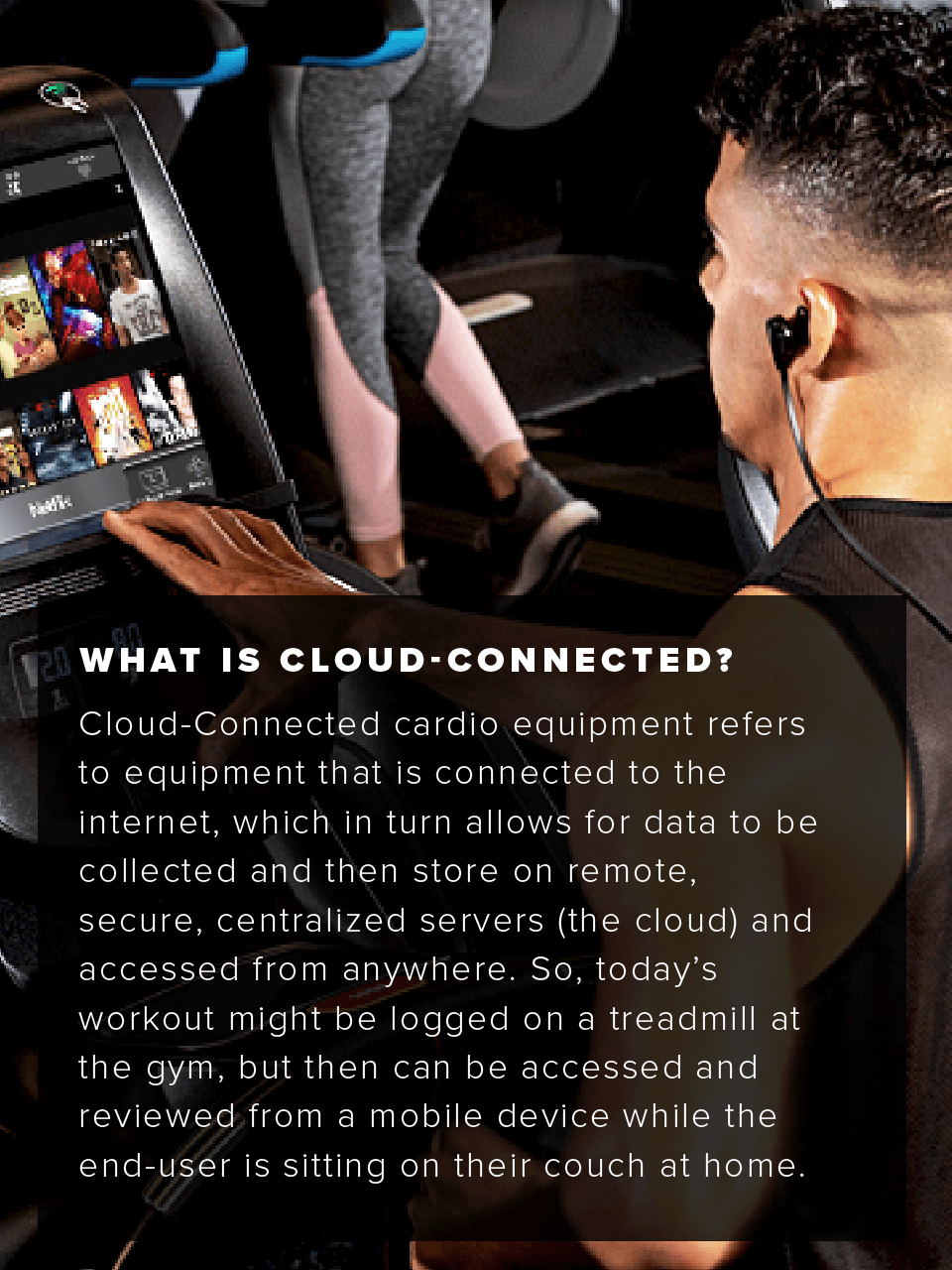
It’s no secret that cardio can be repetitive — running or cycling in place for an hour is hard work. State-of-the-art equipment is aimed at keeping end-users committed, which is not limited to offering access to Netflix and other streaming services. Precor’s RunTV features stunning video content and synched control of the cardio lower for interactive runs, rides, and climbs through some of the world’s most iconic locations. The screen on the treadmill or elliptical is a dynamic tool capable of ensuring that individuals not only stay engaged in their workouts, but in the club or rec center as well. In the past, a user might have run for an hour on the treadmill with no real idea how that particular run compared to their last session . With today’s cloud-based platforms, every workout can be captured and stored in the exerciser’s profile, allowing them to access that data on-demand and helping them improve session-to-session.

consoles.png

Preventative Maintenance

A robust central processing unit and a connection to the internet are also integral to addressing one of the primary pain points for operators — maintenance. Preventative (or predictive) maintenance means the equipment itself has the built-in smarts to identify potential problems and automatically alert technicians that something is about to require service or attention.

It’s worth noting that a robust connection to the internet is crucial when it comes to powering this kind of equipment and features. Our team always surveys the specifics of a facility’s networking capacity and determines how to optimize infrastructure to ensure clients have a great experience using networked cardio machines.

Flexibility

One of the advantages of having computers embedded into a piece of cardio equipment is that new features and technology can be added via software updates. When shopping around, it is worth asking about the technology road map and how they are planning for the digital future.

Bartee says he’s primarily focused on ensuring that flexibility is built into the platform itself. “Boutiques have really blown up. Budgets have really blown up. So we’re really trying to understand how we build systems and platforms that don’t paint us into a corner, so we can respond quickly to support customers as they go through market changes.”

Questions.png

Part of ensuring that kind of flexibility is the openness of Precor’s Preva platform, which is built around common programming languages such as HTML5 and Java. “We have a developer program with instructions, sample code, and we also have engineering partner support in Shanghai, London, and Seattle,” Bartee says. “So it’s one thing to say ‘Hey, I’m open.’ It’s another thing to say ‘Here are the processes and tools to enable creativity by helping partners get on the system and start using the platform.’”

To Bartee’s point, most manufacturers have little interest in becoming content creators, or AI experts. Therefore, it’s key to have a plan in place to partner with with companies proficient in those areas. “It’s complicated to try to cover all those bases, and it’s a ton of money,” Bartee says. “Precor is working really hard to knit together a broad variety of our own services and those of our partners and bring them together on a platform that enables seamless integration so the customer can choose. Our goal is to do what we do well and enable our partners to do what they do well.”

All this new technology adds up to a greater amount of choice for operators, and the number of powerful features can be overwhelming at first. The key to making the right choice for your facility lies in determining what you want your exercisers to experience, and you can plan to lean on our team of specialized experts to help guide you through the process.

Interested in including networked fitness in your cardio lineup? Check out Precor’s product and Mix-and-Match console lineup.

Our services

We are ready to support your facility in every phase.

Partner Brands

Explore our collection of partner brands.

All Partner Brands
Case Studies

Examples of our work.

All Case Studies