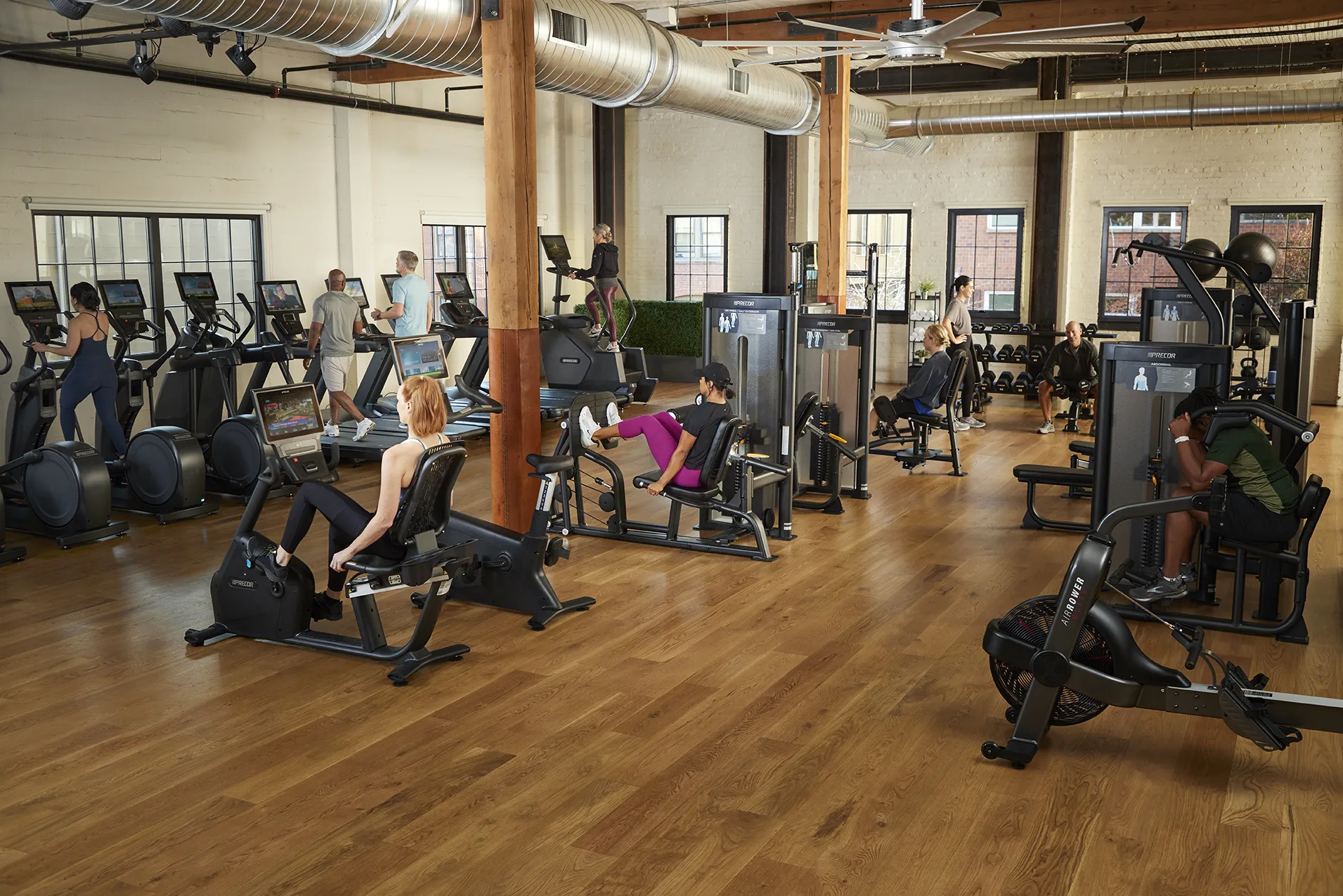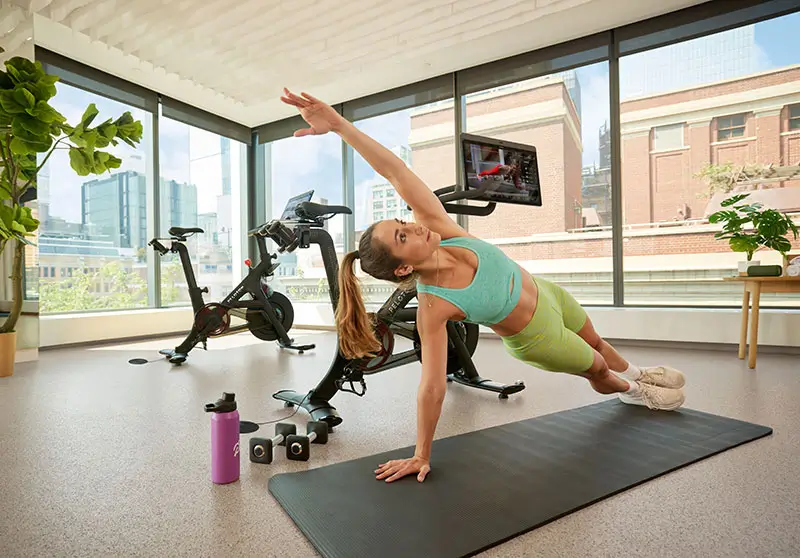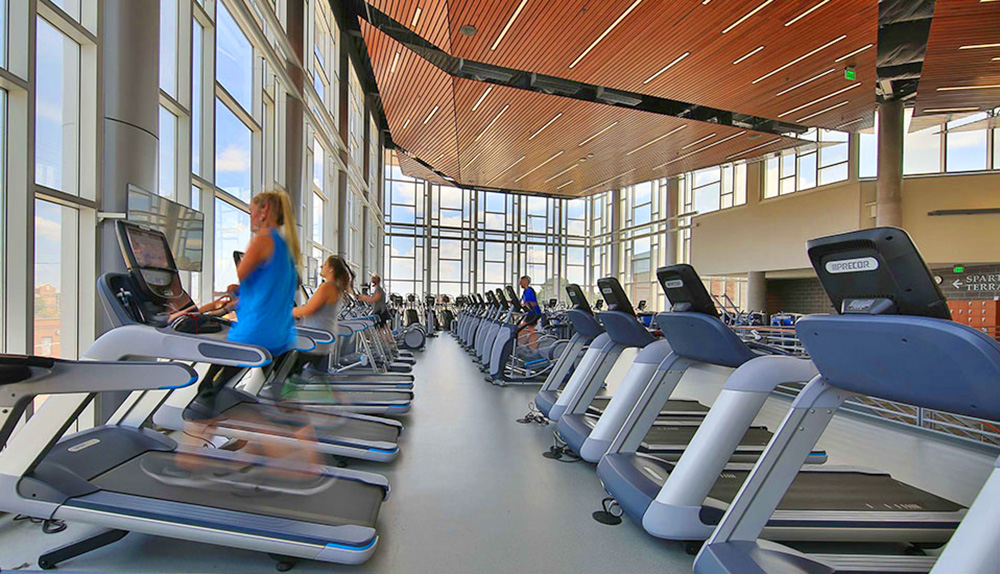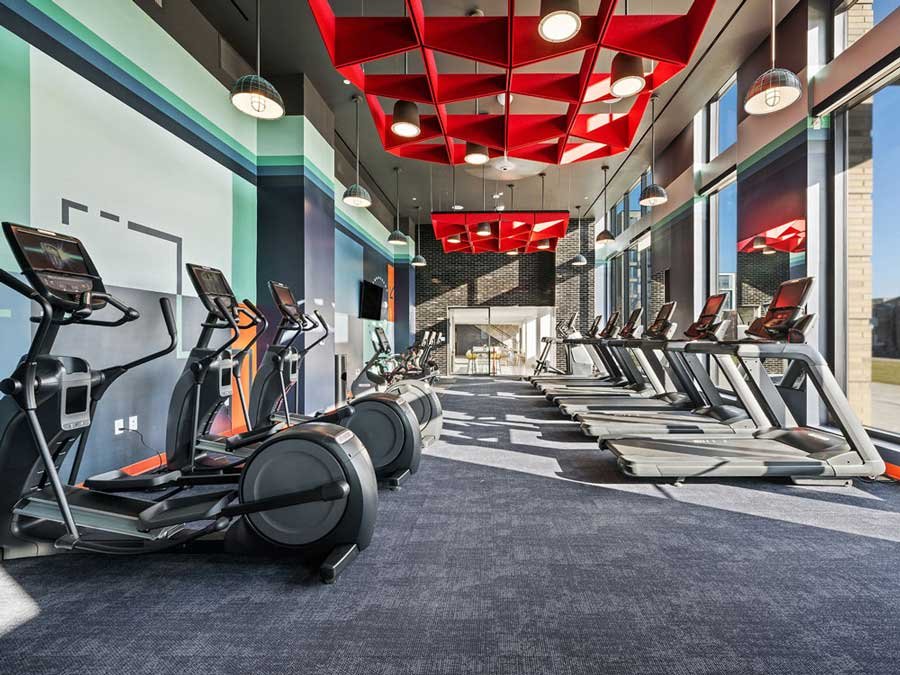
Some of the greatest advancements in fitness technology in the last few years have been in entertainment options. Touchscreen consoles, casting, virtual workouts, embedded apps, Pro:Idiom television programming…all of these and more have found their homes on the humble treadmill, exercise bike, and other cardio machines. Facility managers have access to more options at a better price point to offer an immersive experience to their members. But with any advancement comes new challenges, and these exciting entertainment options require careful planning of infrastructure for optimum user-experience.
As with fitness equipment, there have also been significant changes to TV signal distribution over the last several years. For many years, most TV channels were sent out from the TV service provider using analog signal with no encryption. Now, the large majority of TV service providers use encrypted digital signal. The upside is that digital signal can provide a much clearer, crisper picture at a lower signal strength and allows a higher quantity of channels. The downside of this change is that an additional device is almost always required to remove the encryption from the TV channel so the tuner can display the channel.
Some facilities are adopting IPTV (Internet Protocol television), which has different cabling and infrastructure needs than traditional coax-based TV service. Also, facility-wide Guest Wi-Fi has become a given in today’s fitness facilities.
What challenges have come with the advancement of technology in the fitness industry?
When the digital TV transition first began, the problem was some cardio equipment could not receive digital signal – it could only receive analog. This is not a concern for any devices manufactured since March 2007 as by law they must also receive digital channels. However, there are still a few problems that can arise. The most common in relation to fitness centers include channel control, encryption type, cabling needs, and storage for decryption devices.
As it has become standard for Wi-Fi internet to be broadcast throughout the entire facility, consideration needs to be given to providing sufficient access points and bandwidth to meet the needs of today’s connected population. Allocating dedicated internet bandwidth for your fitness equipment helps ensure a seamless experience for exercisers.
What TV service options are available for a fitness center?
While the options are affected by several factors including facility type, TV provider, geographical area, and facility size, the following basic groups of devices are options for most facilities:
- Set-top box, cable box, or DTA – a relatively small device that removes encryption at each TV or display and sends out one channel at a time.
- Head-end system – a larger rack-mount system that removes encryption from multiple channels at once.
- MDTA, Q2Q, or multiplexor – a larger wall-mount system that removes encryption from multiple channels at once.
What about foregoing live TV altogether?
As the number of content options available with just internet connectivity has increased, more and more facilities are taking the approach of “cutting the cable” and just providing internet connectivity for their fitness equipment. This can be an effective cost-cutting approach, saving not just initial cabling and install fees but also monthly TV service fees. The new Precor P94 and P84 consoles have a robust suite of entertainment options available with only a network connection, including:
- PrecorCast™, a proprietary casting solution that allows exercisers to easily watch their favorite streaming app on the high-definition P94 and P84 Touchscreen Consoles, rather than on their mobile device, without having to sign into these apps on the consoles. As a side bonus, the consoles’ wireless charging capabilities allow exercisers to leave the fitness center recharged in more ways than one.
- PlutoTV, a natively-embedded streaming service that allows seamless access to 250+ TV channels at no charge.
- RunTV, a curated, immersive exertainment experience that provides interactive runs, documentaries and feature films, and expert coaching from top names in sports.
- YouTube and Netflix apps directly integrated onto the console.